
Podiatry care for
forefoot pain
Forefoot pain can make every step uncomfortable.
Pain in the ball of your foot or between your toes can quickly
affect your mobility and enjoyment of everyday activities.
Whether your symptoms have developed gradually or appeared
suddenly, our experienced team can identify the underlying cause
and provide effective treatment to help you walk comfortably again.
expert care. Better outcomes
Did you know?
The ball of your foot absorbs huge forces every time you walk or run.
Even small changes in foot mechanics or wearing shoes that are too narrow can place extra pressure on the nerves and joints, leading to conditions such as Morton's Neuroma.
Identifying the cause early can help prevent pain from becoming a long-term problem.
Why it
matters
The forefoot absorbs significant pressure every time you walk, run or stand. Because of this, even small changes in foot mechanics, footwear or activity levels can lead to pain and discomfort.
Common causes of forefoot pain include Morton's Neuroma, metatarsalgia, stress injuries, joint problems and changes in foot biomechanics. Many people also experience burning, tingling or numbness between the toes, particularly when wearing tight or unsupportive footwear.
At Sevenoaks Podiatry, we assess the way your feet function, how pressure is distributed across the forefoot and how your walking pattern may be contributing to your symptoms. By identifying the underlying cause, we can create a personalised treatment plan to relieve pain and help prevent future problems.

Common causes
Forefoot pain may be caused by Morton's Neuroma, metatarsalgia, stress injuries, arthritis, poor footwear or abnormal foot biomechanics.
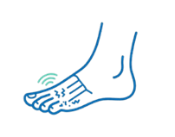
Common symptoms
Pain in the ball of the foot, burning sensations, numbness, tingling between the toes or discomfort when walking or standing.

Daily impact
Forefoot pain can make walking, exercising, standing for long periods and wearing certain shoes increasingly uncomfortable.
Early treatment
Early treatment can reduce pain, relieve pressure on the forefoot and prevent symptoms from becoming more persistent.
Supporting your
recovery
Forefoot pain often develops because excessive pressure is placed on the front of the foot. This may be caused by poor foot mechanics, changes in activity levels, unsuitable footwear or conditions such as Morton's Neuroma or metatarsalgia.
At Sevenoaks Podiatry, we carry out a comprehensive assessment to understand how your feet move and where excessive pressure is occurring. By identifying the source of your symptoms, we can recommend treatments that not only relieve pain but also improve the way your feet function.
Your personalised treatment may include gait analysis, footwear advice, pressure-relieving orthoses, padding, rehabilitation exercises and practical lifestyle guidance. Our aim is to reduce discomfort, restore normal walking and help you stay active without pain.
How we help
Assess
We assess your symptoms, foot structure, gait and pressure distribution to identify the underlying cause of your forefoot pain.
Treat
Treatment may include gait analysis, custom orthoses, footwear advice, pressure-relieving padding and rehabilitation exercises where appropriate.
Protect
We help reduce excessive pressure on the forefoot by improving foot mechanics and recommending suitable footwear and long-term support.
Review
Your recovery is monitored through regular reviews, allowing us to adapt your treatment and help prevent future episodes of forefoot pain.
Have you got questions about your forefoot pain?
Call us, we're here to help:
Questions patients
often ask
What is Morton's Neuroma?
Morton's Neuroma is a thickening of the tissue surrounding a nerve between the toes, most commonly between the third and fourth toes. It often causes burning pain, tingling or the sensation of standing on a small pebble.
Why does the ball of my foot hurt when I walk?
Pain beneath the ball of the foot can be caused by excessive pressure, metatarsalgia, Morton's Neuroma, joint problems or changes in foot biomechanics.
Can shoes cause forefoot pain?
Yes. Tight, narrow or high-heeled shoes can increase pressure on the forefoot and contribute to conditions such as Morton's Neuroma and metatarsalgia.
Can orthotics help forefoot pain?
Yes. Custom orthoses can redistribute pressure away from painful areas, improve foot function and reduce strain on the forefoot during walking.
Will I need surgery for Morton's Neuroma?
Most people improve with conservative treatment, including footwear changes, orthoses and activity modification. Surgery is generally only considered when symptoms persist despite appropriate non-surgical treatment.
When should I seek treatment for forefoot pain?
If your forefoot pain is persistent, worsening or affecting your ability to walk, exercise or wear normal footwear comfortably, it's advisable to have it professionally assessed.